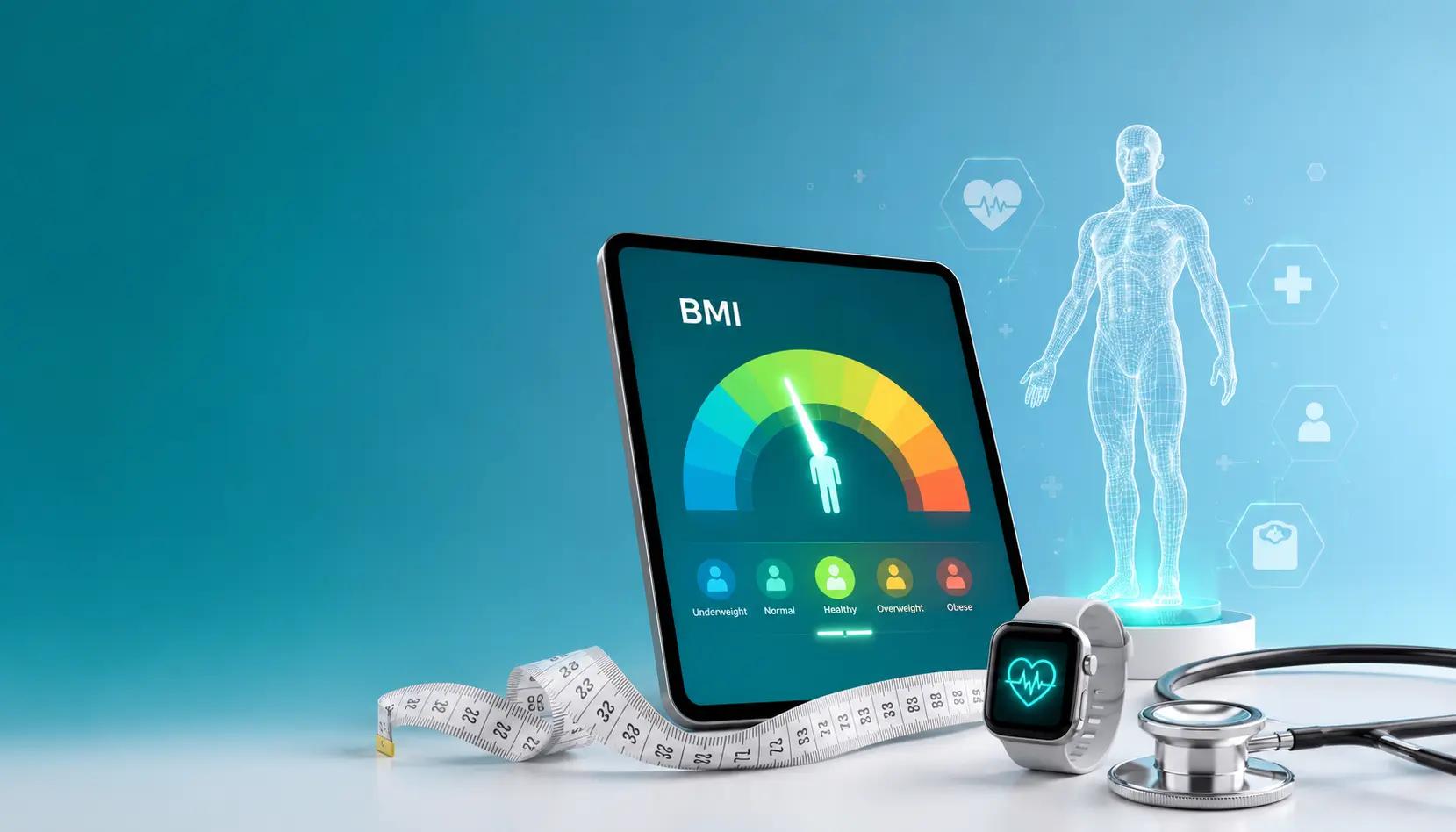
bmi calculator
Introduction
In today’s health-conscious world, understanding your body composition is more important than ever. One of the most widely used tools for assessing weight-related health risks is the body mass index (BMI) calculator. Whether you’ve heard it called a body index calculator, mass index calculator, body weight index calculator, or body mass index BMI calculator, they all refer to the same essential screening tool that millions of people use every day to check their health status.
But what exactly is BMI, how is it calculated, and what does your number really mean? This comprehensive guide will walk you through everything you need to know about BMI calculators, from the basic formula to the latest research on its limitations and alternatives.
What Is BMI? Understanding the Basics
Body Mass Index (BMI) is a simple measure that uses your height and weight to determine whether you fall into a healthy weight range. It is defined as the weight in kilograms divided by the square of the height in metres (kg/m²). This calculation provides a number that healthcare professionals and public health organizations use to screen for weight categories that may lead to health problems.
The BMI was originally developed in the 1830s by Belgian mathematician Adolphe Quetelet. Interestingly, it was never designed to diagnose individual health—it was created as a population-level statistic. Despite this origin, BMI has become the most widely used screening tool for weight classification by healthcare professionals, public health organizations, and insurance companies worldwide.
How to Calculate Your BMI: The Formula
Using a BMI calculator is straightforward. The body mass index BMI calculator uses one of two formulas depending on your preferred units:
Metric Formula
BMI = weight (kg) ÷ height (m)²
For example, an adult weighing 70 kilograms and standing 1.75 meters tall would have a BMI calculated as:
70 ÷ (1.75 × 1.75) = 70 ÷ 3.0625 ≈ 22.86
mperial Formula
BMI = [weight (lbs) ÷ height (in)²] × 703
For instance, a person weighing 160 pounds who is 69 inches (5’9″) tall would calculate:
(160 ÷ 69²) × 703 = (160 ÷ 4761) × 703 ≈ 23.6
Step-by-Step Calculation Process
- Measure your weight accurately (in kilograms or pounds)
- Measure your height precisely (in metres or inches)
- Square your height (multiply height by itself)
- Divide your weight by your squared height
- For imperial units, multiply the result by 703
The beauty of a body weight index calculator is that it does all this math instantly—you simply enter your height and weight, and the body index calculator provides your BMI number and weight category.
BMI Classification Chart: What Your Number Means
Once you’ve used a mass index calculator or body mass index BMI calculator, the next step is understanding what your result means. The World Health Organization (WHO) and Centers for Disease Control and Prevention (CDC) use the following standard BMI categories for adults aged 20 and older:
| BMI Range | Weight Category |
| Below 18.5 | Underweight |
| 18.5 – 24.9 | Normal (Healthy Weight) |
| 25.0 – 29.9 | Overweight |
| 30.0 – 34.9 | Obesity Class I |
| 35.0 – 39.9 | Obesity Class II |
| 40.0 and above | Obesity Class III (Severe Obesity) |
The WHO further distinguishes that a BMI below 17.0 indicates thinness, with a BMI below 16.0 associated with markedly increased health risks. For obesity, Class III (BMI ≥ 40) is sometimes referred to as severe or extreme obesity.
Health Risks Associated with BMI Categories
Underweight (BMI Below 18.5)
Being underweight isn’t just about appearance—it comes with significant health concerns. Individuals with a BMI in the underweight range may face increased risks of:
- Fatigue and low energy levels
- Weakened immune system (lower protection against illness)
- Muscle loss and weakness
- Bone loss (osteoporosis risk)
- Hair loss
- Hormonal problems and menstrual irregularities
Research shows that approximately 20% of women in their twenties in some developed nations are underweight (BMI < 18.5 kg/m²), which is associated with decreased bone mass, menstrual abnormalities, impaired glucose tolerance, and sarcopenia-like changes.
Normal Weight (BMI 18.5 – 24.9)
A BMI in the normal range indicates that you have a lower risk for weight-related health problems. However, it’s important to note that BMI is just one measure—you can have a “normal” BMI but still have unhealthy body composition, a condition sometimes called “normal weight obesity” where body fat percentage is elevated despite a healthy BMI.
Overweight (BMI 25.0 – 29.9)
Being overweight increases your risk for various health conditions, including:
- High blood pressure
- Heart disease and stroke
- Type 2 diabetes
- Arthritis and joint pain
- Certain types of cancer
The World Cancer Research Fund has found strong evidence that living with overweight or obesity is a cause of at least 13 types of cancer. In fact, after not smoking, maintaining a healthy weight is one of the most important things you can do to reduce your cancer risk.
Obesity (BMI 30.0 and Above)
Obesity is associated with over 200 comorbidities and significantly impacts both quality of life and life expectancy. Research indicates that:
- Obesity reduces life expectancy by 2–4 years for BMI 30–35
- Class III obesity (BMI ≥40) is associated with triple the risk of infection-related hospitalization
- People who were obese during early adulthood had an 85% higher risk of premature death and death from cardiovascular disease
The WHO estimates that in 2019, approximately 5 million noncommunicable disease deaths were caused by higher-than-optimal BMI.

Important Limitations of BMI
While the body mass index calculator is a useful screening tool, it has significant limitations that every user should understand. As the CDC notes, “BMI is a screening measure and is not intended to diagnose disease or illness”.
1. BMI Doesn’t Measure Body Fat Directly
BMI is a crude measure of body composition that only relies on height and weight and does not account for muscle mass or fat distribution. It lumps all body weight together as if muscle and fat were the same.
2. Muscle Mass vs. Fat Mass
Athletes and physically active people often have a “high BMI” despite having low body fat and excellent heart health. A muscular individual may be labeled “obese” by BMI standards while being metabolically healthier than someone with a “normal” BMI.
3. Fat Distribution Matters
Where fat is stored in the body matters more than how much you weigh. Visceral fat (deep abdominal fat around organs) is strongly linked to heart disease, type 2 diabetes, and fatty liver disease. Subcutaneous fat (under the skin) is far less dangerous. BMI cannot distinguish between the two.
4. Ethnicity and Genetic Differences
Different ethnic groups develop metabolic disease at different BMI levels. For South Asian populations, the WHO recommends lower BMI cut-offs: overweight begins at 23 (not 25) and obesity at 27.5 (not 30). This is because South Asians accumulate harmful visceral fat at lower body weights than Western populations.
Research shows that Indians have:
- Higher visceral fat at lower BMI
- Lower muscle mass genetically
- Different bone density patterns
An Indian with a BMI of 24 might have 35% body fat (unhealthy), while another with BMI 28 might have only 25% body fat (healthy).
5. Age Considerations
BMI does not adjust for aging-related muscle loss. Older adults may have a “normal” BMI but dangerously low muscle mass (sarcopenia). BMI-adjusted muscle mass shows greater deterioration with age compared with height-adjusted measures, suggesting conventional assessments may mask sarcopenic progression.
6. Inaccuracy for Certain Groups
BMI results may be less reliable for:
- Athletes and those with a lot of muscle
- Certain ethnic groups
- Older people
- Pregnant women
- Those less than 1.5m/5ft tall
- Children and those under 18
Research on BMI Accuracy
A 2026 study published in Nutrients found that while 78.1% of individuals in the normal-weight range were correctly classified by BMI, 53.4% of the overweight group and 68.4% of the underweight group were misclassified. More than one-third (34%) of those classified as obese by BMI were actually in the overweight category when body fat percentage was measured.
Another study found that over half (53%) of those labeled overweight by BMI were placed in the wrong category—and about three-quarters of them were actually within the normal weight range.
Beyond BMI: A More Complete Picture of Health
Given BMI’s limitations, healthcare providers look at multiple factors to assess health. As one medical expert noted, “Good clinicians use BMI as a starting point, not a verdict”.
Key Metrics Doctors Consider
1. Waist Circumference and Waist-to-Height Ratio
These are simple but powerful indicators of risk. A waist circumference above 40 inches (102 cm) for men and 34.6 inches for women is associated with increased cardiometabolic disease risk. A waist that’s more than half your height is considered elevated.
2. Body Fat Percentage
Body fat percentage provides a more accurate measure of adiposity than BMI alone. Healthy ranges are approximately:
- Men: 18-25% (athletic), 25-30% (healthy, fit)
- Women: 20-30% (athletic), 30-35% (healthy, fit)
3. Blood Pressure, Blood Sugar, and Cholesterol
These metabolic markers often matter more for health outcomes than BMI alone.
4. Muscle Mass
More muscle means higher metabolism, better insulin sensitivity, stronger bones, and lower visceral fat—even at the same body weight.
5. Body Composition Analysis
Advanced techniques like DXA scans provide detailed information about bone density, muscle mass, and fat tissue. Whole-body MRI can create detailed maps of fat and muscle distribution across the body.
Who Should Use a BMI Calculator?
Despite its limitations, a body mass index BMI calculator remains a valuable starting point for:
- General population screening – It’s fast, free, and requires nothing more than a scale and measuring tape
- Tracking trends over time – Monitoring changes in BMI can help identify weight gain or loss patterns
- Initial health assessment – It provides a quick first indication of whether weight may be a health concern
- Public health research – BMI is valuable for population-level studies and tracking obesity trends
When BMI May Not Be Appropriate
You should speak with a healthcare provider about getting a more accurate assessment if you belong to any of these groups:
- Athletes or highly muscular individuals
- Members of certain ethnic groups (especially South Asian, East Asian, and Pacific Islander populations)
- Older adults (over 65)
- Pregnant women
- Children and teenagers (under 18)
- Individuals shorter than 1.5m (5ft)
How to Use Your BMI Results
If your BMI falls outside the healthy range, here’s what to do:
If Your BMI Is Above the Healthy Range
The World Cancer Research Fund recommends talking to your doctor before making major changes to your diet or physical activity. However, don’t let that stop you from making small, positive changes today—losing just a few pounds can improve your health and lower your risk of cancer and other diseases.
If Your BMI Is Below the Healthy Range
If your BMI is below 18.5, gaining weight could benefit your health. Being underweight isn’t good for your health, and you should speak to your doctor for help and advice.
Regardless of Your BMI
Remember that BMI is just one data point among many. A comprehensive approach to health includes:
- Regular physical activity
- A balanced, nutritious diet
- Adequate sleep
- Stress management
- Regular check-ups with healthcare providers
- Monitoring other health metrics (blood pressure, cholesterol, blood sugar)
The Future of Health Assessment
The medical community is increasingly moving beyond BMI toward more personalized health assessment. A 2026 study using AI to analyze whole-body MRI scans from more than 66,000 participants found that the quality and amount of skeletal muscle, not just visceral fat, are strong predictors of diabetes, major cardiovascular events, and mortality.
Researchers have also developed “metabolic BMI” using AI-based computational models that incorporate metabolic measurements. This approach shows that people of normal weight with a high metabolic BMI can have up to a fivefold higher risk of metabolic disease.
Conclusion
The BMI calculator—whether you call it a body index calculator, mass index calculator, body weight index calculator, or body mass index BMI calculator—remains one of the most accessible and widely used tools for assessing weight-related health risks. It’s simple, free, and provides a useful starting point for understanding whether your weight falls within a healthy range.
However, it’s crucial to understand that BMI is a screening tool, not a diagnostic one. It doesn’t account for muscle mass, fat distribution, age, sex, or ethnicity. A comprehensive approach to health looks beyond the number on a body mass index BMI calculator to consider body composition, metabolic health, fitness levels, and overall well-being.
Use your mass index calculator result as a conversation starter with your healthcare provider, not as a final verdict on your health. Combined with other assessments and a holistic approach to wellness, understanding your BMI can be a valuable step on your journey to better health.
Disclaimer: This article is for informational and educational purposes only and does not constitute medical advice, diagnosis, or treatment. Always consult your healthcare provider for personalized medical advice regarding your BMI and overall health.
Frequently Asked Questions (FAQs)
1. Is BMI accurate for athletes or people who exercise a lot?
No, BMI is notoriously inaccurate for athletes and highly muscular individuals. Since the body mass index calculator only measures total weight relative to height, it cannot distinguish between muscle mass and body fat. Because muscle is significantly denser and heavier than fat, a muscular person may be classified as “overweight” or even “obese” by the BMI scale, despite having excellent cardiovascular health and a very low body fat percentage. For these individuals, body fat percentage or waist circumference are much more reliable health indicators.
2. Does BMI apply equally to all ethnic groups?
Not exactly. Research has shown that different ethnic groups develop metabolic diseases (like type 2 diabetes and heart disease) at vastly different BMI levels. For example, South Asian and East Asian populations tend to accumulate harmful visceral fat at lower body weights. Because of this, the World Health Organization (WHO) recommends lower BMI cut-off points for these groups—where overweight begins at 23.0 (instead of 25.0) and obesity at 27.5 (instead of 30.0). A “normal” BMI for a Westerner might actually indicate elevated health risks for someone of South Asian descent.
3. What are the best alternatives to the BMI calculator?
If you want a more complete picture of your health, healthcare professionals recommend looking beyond the mass index calculator and tracking these alternative metrics instead:
Waist-to-Height Ratio: This is a powerful predictor of heart disease risk. A general rule is that your waist circumference should be less than half of your height.
Waist Circumference: A simple tape measure around the abdomen. A measurement above 40 inches (102 cm) for men and 34.6 inches for women indicates elevated visceral fat and cardiometabolic risk.
Body Fat Percentage: This provides a direct measurement of adiposity. Methods like DXA scans or bioelectrical impedance scales are far more accurate than BMI.
Metabolic Blood Markers: Ultimately, your blood pressure, fasting blood sugar, and cholesterol levels often tell a more important story about your health than your BMI number.
4. Can I have a “normal” BMI but still be unhealthy?
Absolutely. This condition is clinically referred to as “normal weight obesity.” You can have a BMI between 18.5 and 24.9 (classified as “healthy”) but still carry a dangerously high percentage of body fat and a low amount of muscle mass. Many individuals with a normal BMI actually have elevated levels of visceral fat (the dangerous fat surrounding internal organs), putting them at a significant risk for insulin resistance, heart disease, and metabolic syndrome. This is exactly why experts urge you to use BMI as a starting point, not a final verdict on your health.
5. Should older adults rely on BMI?
Older adults should be very cautious when interpreting their BMI. As we age, we naturally lose muscle mass—a condition called sarcopenia—while often maintaining or even increasing body fat. This means an older adult could have a “normal” BMI but dangerously low muscle mass and high fat percentage, which increases the risk of falls, frailty, and weakness. Conversely, a slightly higher BMI (in the 25–27 range) is often considered protective for older adults, offering nutritional reserves during illness. Relying solely on a body index calculator for seniors can mask underlying health issues; muscle mass and physical function tests are much better assessments.
also read: How Do You Meditate? Learn How to Meditate Properly 5 Easy
follow on youtube: trend talk
About The Author